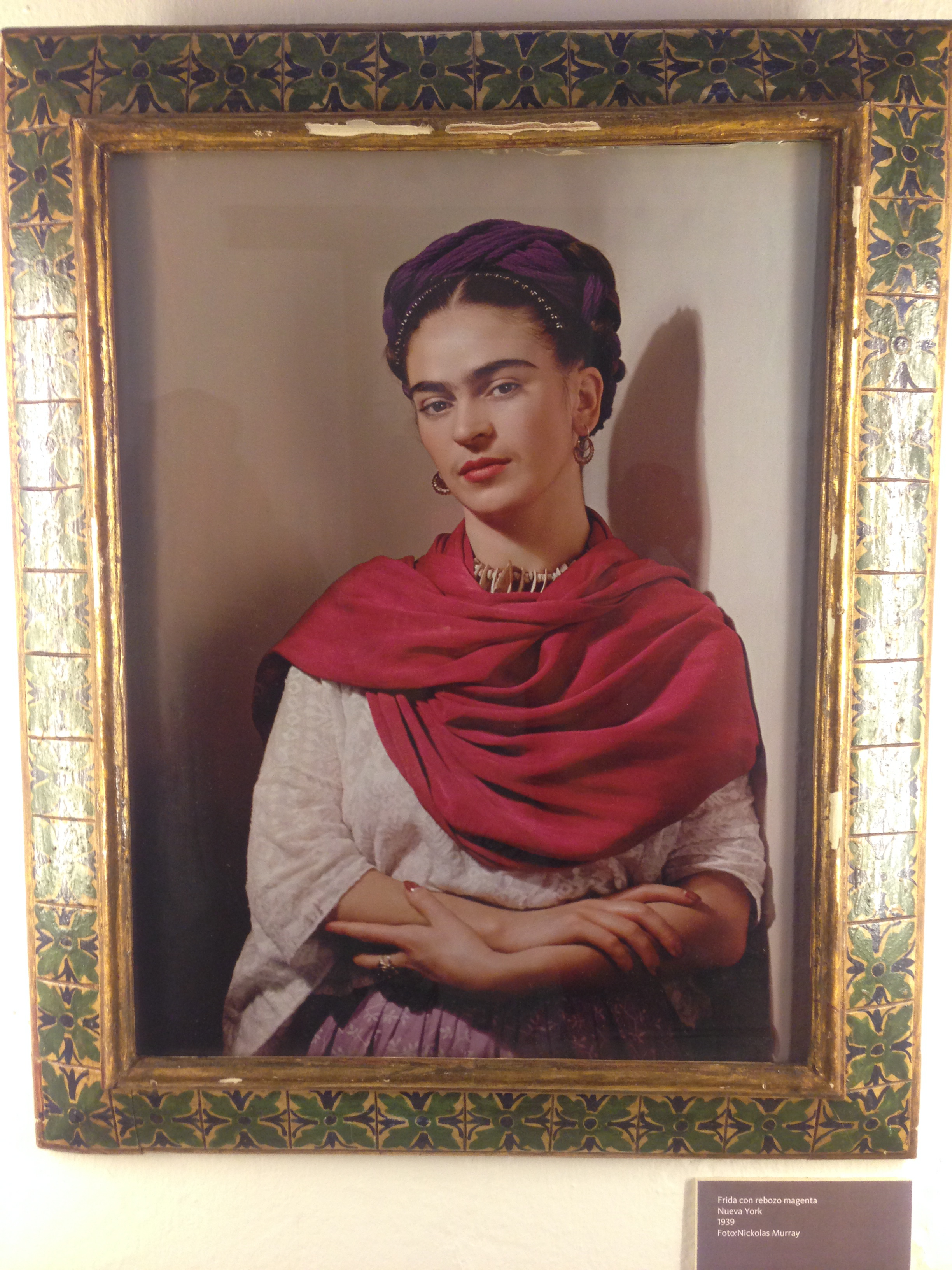

Visiting her home gives you a greater understanding of the woman behind the myth. The museum is located in the actual house where she lived with her husband, comrade, mentor and fellow artist, Diego Rivera from 1929 to 1954. You can walk through the different rooms of their house including her bedroom, studio and kitchen and see her surroundings. Her paints and pastels, the butterfly collection above her bed, pots and pans, and pre-Hispanic art collection are all on full display, along with some rooms of her paintings, sketches and photographs.


One of the most powerful parts of the museum for me was the temporary fashion exhibit, “Las apariencias engañan: los vestidos de Frida Kahlo” (“Appearances Deceive: The Clothes of Frida Kahlo”) which not only featured some of Frida Kahlo’s actual clothing and gorgeous accessories but also her braces, crutches and casts. 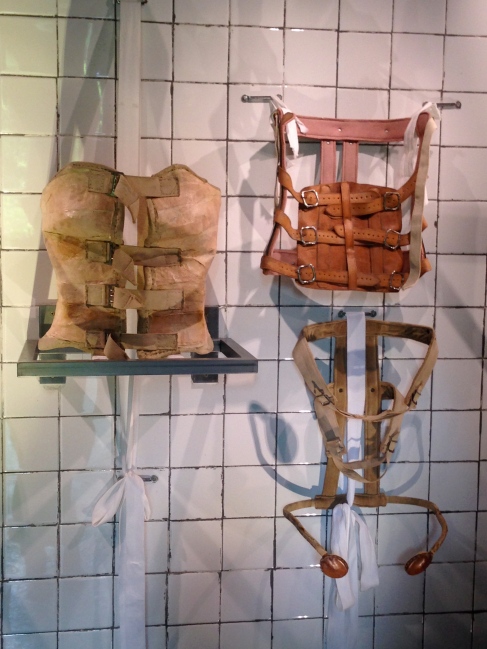

From what I see, hear and experience, most women today feel the same way about themselves regardless of their height, weight or physical ability: that we are less than perfect…or light years away from perfect. However, she chose to highlight parts of physical appearance that were deviations from the “norm,” from emphasizing her unibrow and mustache to painting several works about her physical challenges featuring rods in her body, casts and disembodied limbs.
Yet she celebrated herself by documenting all aspects of her life, especially her pain, tragedy and complex emotions. Her evocative painting, “Frida y la cesarea” (Frida and the Caesarean) processes her miscarriage and the caesarean procedure she would have had.

Kahlo also used her art to express her political beliefs that were controversial at the time but were at the core of who she was. Whether you agree with her ideology or not, we can be inspired by her dedication to her political beliefs and commitment to expressing what she believes in.
Kahlo also expressed her love of nature in her art and in her home. Many of her works and photographs feature monkeys, cats, birds and other animals. There is a beautiful patio and garden in the center of her home with trees, plants and flowers in where she must have enjoyed painting, entertaining and playing with her pets.
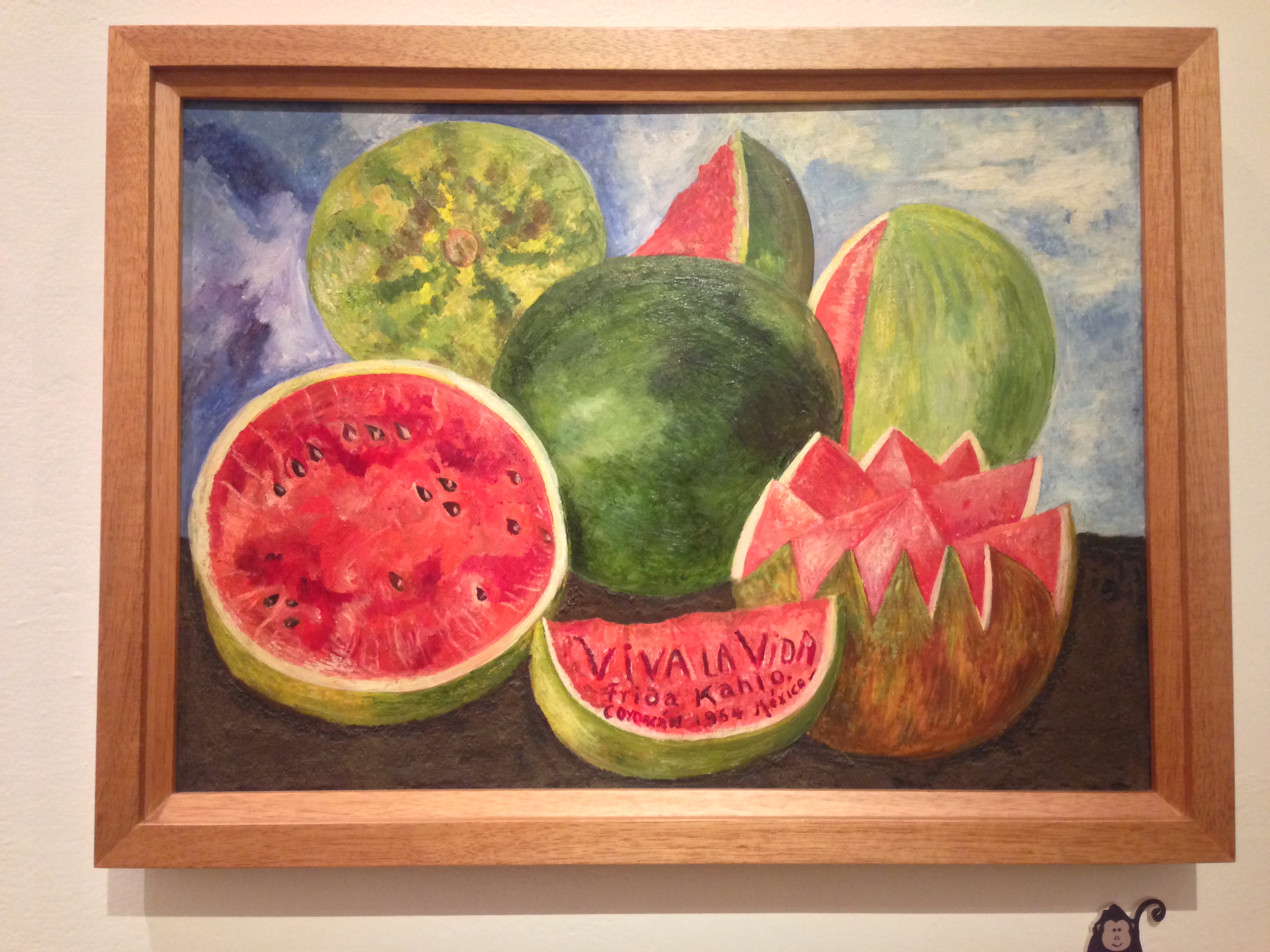
My favorite piece in the museum was “Viva La Vida”. It is a simple still life of watermelon where Frida painted the words “Viva la vida” in one of the slices. It is said to be her last painting, though there is debate that she painted it two years earlier and then added her signature, the year (1954) and the place (Coyoácan) eight days before her death. Whenever it was actually done, the work made me feel the levity of her spirit and appreciation for life’s sweetness. It was also a reminder to me that time goes really quickly so to live fully and to be present to each moment.
Frida Kahlo is our “Fierce Woman” for March, Women’s History Month, as her life and her work continue to gain more popularity as an essential part of art history, Mexican history and women’s global history. Everything about her expression from the themes of her work, her resilience, the way she dressed, and her creative vulnerability and honesty inspires me and many other women and men all of all ages around the world to “viva la vida.”