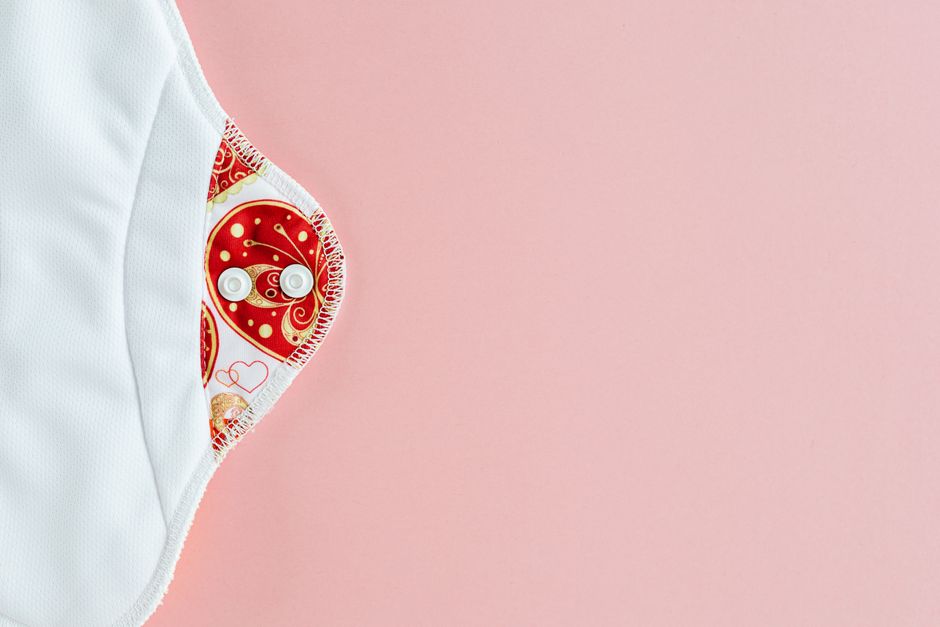

Biodegradable menstrual pads are period pads made from natural, plant-based materials that break down through natural processes — unlike conventional pads, which can take up to 450 years to decompose due to their plastic content.
Quick answer: what makes a pad biodegradable?
- Made from plant-based materials like organic cotton, bamboo, or banana fiber
- Free from synthetic plastics in the top sheet, core, and backing layer
- Certified by standards like GOTS, OEKO-TEX, or ECOCERT
- Decompose in as little as 6 months to 3 years (vs. centuries for plastic pads)
- Safer for sensitive skin — no harsh chemicals, dyes, or synthetic fragrances
Here’s a number that’s hard to ignore: the average woman uses around 130 kg of disposable menstrual products over her lifetime. In India alone, nearly 336 million women using conventional pads generates roughly 17,180 tons of pad waste every single month. Most of that waste sits in landfills for centuries.
Conventional pads are largely made from plastic. The same material in a carrier bag. The same material projected to outnumber aquatic animals in our oceans by 2050.
That’s the problem biodegradable pads are designed to solve — and why more people are paying attention to what’s actually in their period products.
I’m Ariel, and at Maxim Hygiene Inc. I’ve spent years developing organic, chlorine-free cotton personal care products — including biodegradable menstrual pads — with a focus on women’s health and environmental responsibility. In this guide, I’ll walk you through everything you need to make a confident, informed switch.

What are Biodegradable Menstrual Pads?
When we talk about biodegradable menstrual pads, we are referring to hygiene products designed to return to the earth. Unlike their conventional counterparts, these pads are constructed from materials that microorganisms can break down into organic matter.
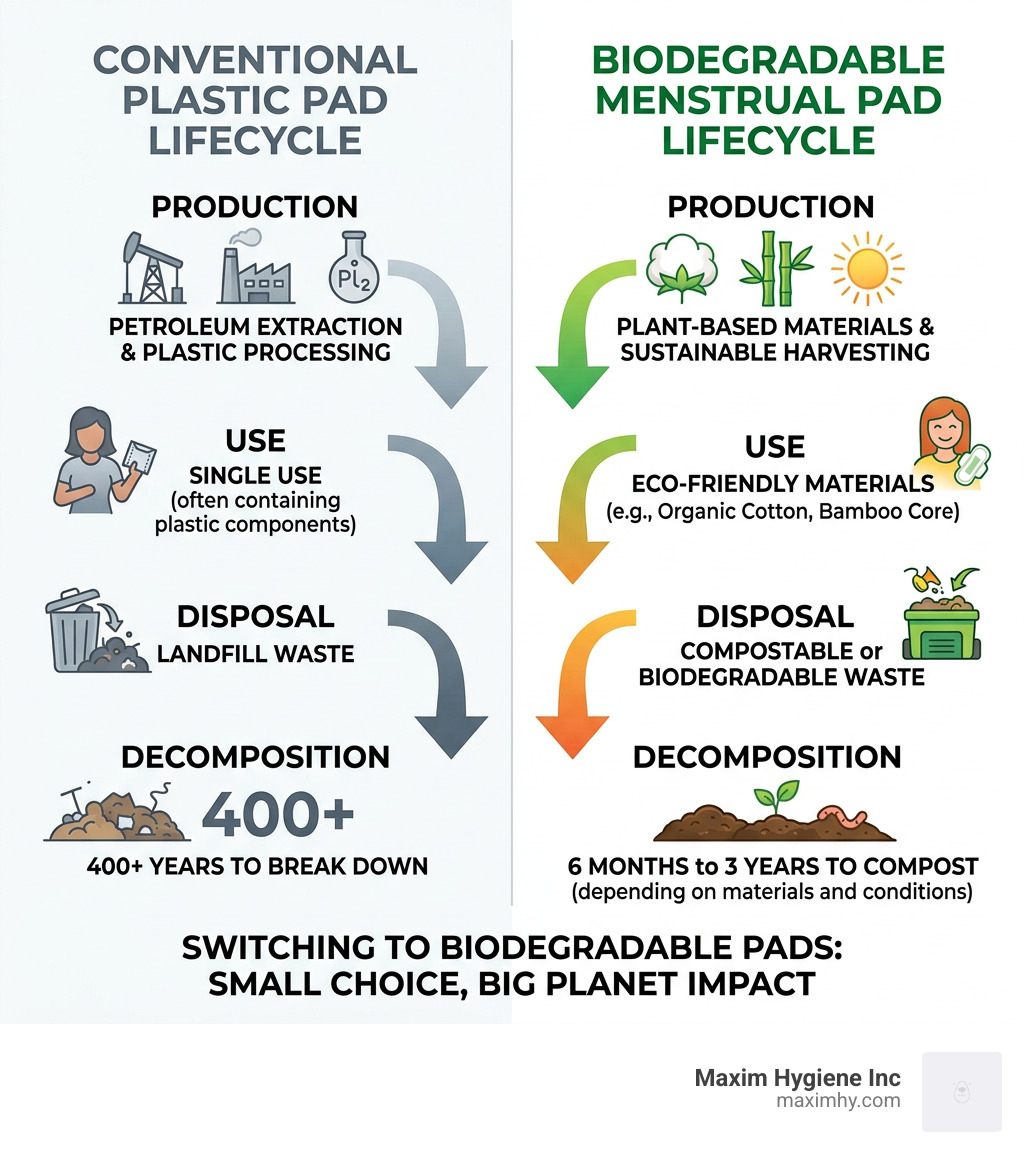
Standard sanitary pads are often a “plastic cocktail.” A single pack can contain the equivalent of up to five plastic carrier bags. From the perforated plastic top sheet to the leak-proof backsheet and even the synthetic glues, conventional pads are built to last—which is exactly what we don’t want once they hit the trash.
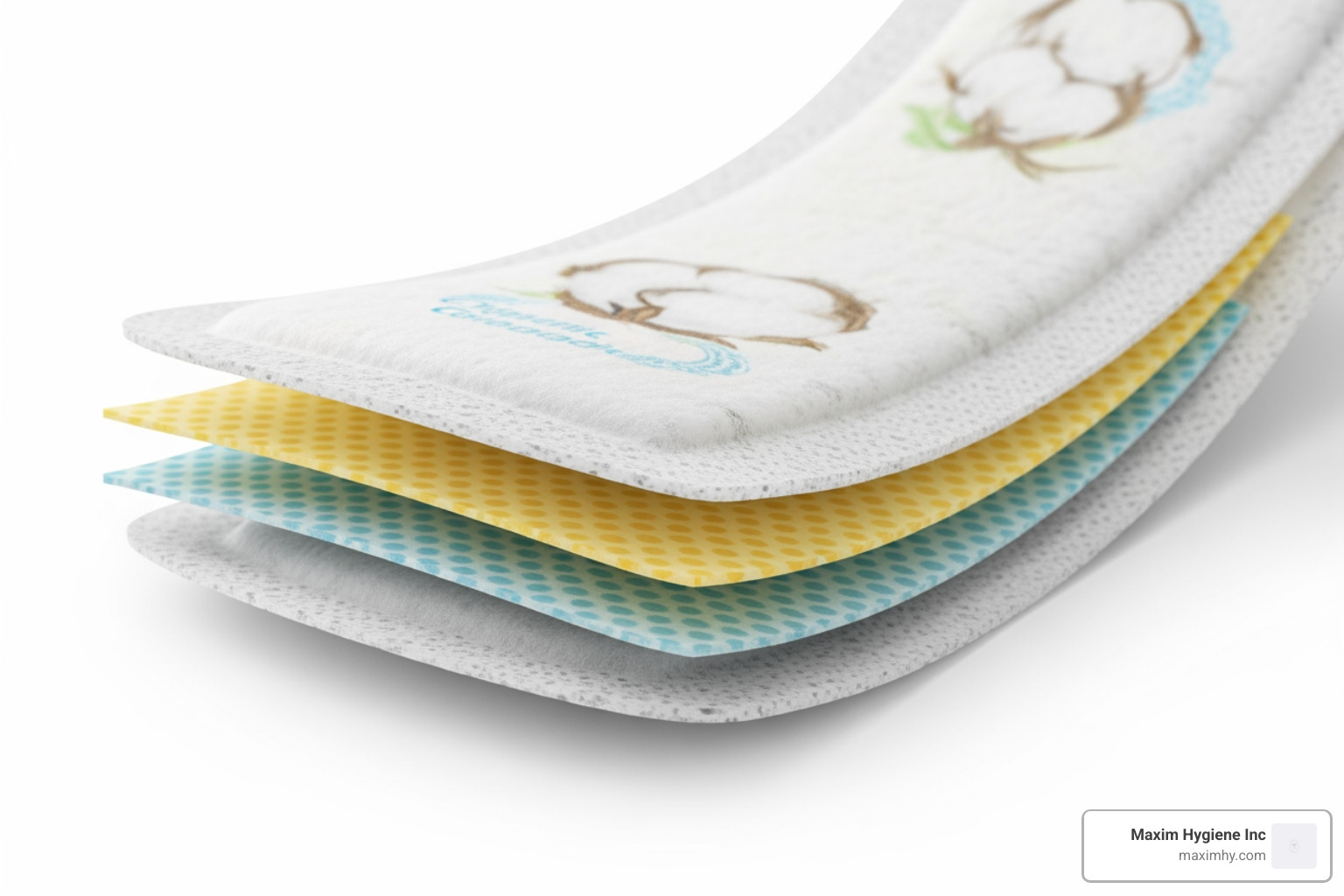
In contrast, a truly biodegradable pad utilizes plant-based non-woven fabrics for the top layer, breathable biodegradable films (often derived from corn starch) for the backing, and natural fibers for the absorbent core.
|
Feature |
Conventional Plastic Pads |
Biodegradable Alternatives |
|
|---|---|---|---|
| Primary Material |
Polypropylene/Polyethylene (Plastic) |
Organic Cotton, Bamboo, Banana Fiber |
|
| Decomposition Time |
450 – 500 Years |
6 Months – 3 Years |
|
| Chemicals |
Chlorine bleach, Dioxins, Fragrances |
Chlorine-free, Fragrance-free |
|
| Skin Impact |
Risk of rashes and “soggy” feel |
Breathable, Hypoallergenic |
|
| Environmental Legacy |
Microplastics in oceans/landfills |
Composts into organic matter |
|
If you are looking for a starting point, our Organic Cotton Ultra Thin Pads and Pantiliners offer the perfect balance of modern performance and environmental integrity.

Key Materials in Biodegradable Menstrual Pads
The “magic” of a biodegradable pad lies in its ingredients. We don’t need oil-based plastics when nature provides superior alternatives:
- Organic Cotton: This is the gold standard for comfort. It is naturally breathable and absorbent. By using 100% organic cotton, we ensure that no pesticides or GMOs enter the production cycle or touch your skin.
- FSC-Certified Bamboo: Bamboo is an incredibly sustainable crop. It grows rapidly with minimal water. When processed into pulp, it creates a highly absorbent core that holds moisture effectively.
- Banana Fiber: One of the most exciting innovations in period care is the use of banana pseudo-stem fiber. Banana farms yield a staggering 220 tonnes of biomass waste per hectare. Research shows that banana fiber pads are highly absorbent and can degrade in just 7-8 months, compared to synthetic pads that show zero degradation in the same timeframe.
- Corn Starch Bioplastic: To prevent leaks, pads need a barrier. Instead of petroleum-based plastic, many eco-friendly brands use corn starch-based bioplastic. It’s leak-proof but compostable.
- Wood Fluff Pulp: Often sourced from sustainably managed forests, this provides the “loft” and initial absorption in the middle of the pad.
Certifications to Look For
With “greenwashing” on the rise, it’s important to know which labels actually mean something. When we develop our Organic Pure and Natural Pads Liners, we look for rigorous third-party verification:
- GOTS (Global Organic Textile Standard): Ensures the cotton is truly organic from seed to finished product.
- EU Ecolabel: Verifies a reduced environmental impact throughout the entire product lifecycle.
- FSC (Forest Stewardship Council): Guarantees that any wood or bamboo pulp comes from responsibly managed forests.
- OEKO-TEX Standard 100: Certifies that every component of the product is free from harmful substances.
- USDA Organic: Confirms the agricultural ingredients are grown according to federal organic guidelines.
Health and Environmental Benefits of Switching
The benefits of biodegradable menstrual pads extend far beyond the landfill. They start with your own body.
Many women suffer from “pad rash”—that uncomfortable itching and irritation that often occurs toward the end of a cycle. This is usually caused by the lack of breathability in plastic top sheets and the presence of synthetic fragrances or residual chemicals from the bleaching process.
Conventional pads are often bleached with chlorine, which can leave behind trace amounts of dioxins. Dioxins are known carcinogens and can interfere with the endocrine system. By choosing Natural Organic Cotton Pads Liners, you are opting for a “Totally Chlorine Free” (TCF) product, eliminating that risk entirely.
From an environmental perspective, switching is a vote for our oceans. With plastic projected to outweigh fish by 2050, every plastic-free period matters. Biodegradable pads reduce your carbon footprint by utilizing renewable agricultural waste (like banana or bamboo) rather than fossil fuels.
Performance and Absorbency of Biodegradable Menstrual Pads
One common myth is that “natural” means “leaky.” This couldn’t be further from the truth. In fact, some natural fibers are more absorbent than cotton alone.
- Leakage Prevention: Modern biodegradable pads use winged designs and leak-proof backings made from plant-based films that perform just as well as plastic.
- The SAP Question: Many commercial pads use Super Absorbent Polymers (SAP) to turn liquid into gel. While some eco-brands use a specialized Japanese Sumitomo SAP that is highly efficient, others rely on high-density natural cores like bamboo or banana pulp.
- Wetback Tests: This measures how much moisture stays against your skin. High-quality organic pads are designed to wick moisture into the core, keeping the surface dry and comfortable.
For those worried about consistency, our organic cotton subscriptions ensure you never run out of reliable, high-performance protection.
Antibacterial Agents: Turmeric and Neem
Innovation in the biodegradable sector often looks back to traditional wisdom. In some regions, especially in rural production of low-cost pads, natural extracts are used to enhance safety.
- Turmeric (Curcuma longa): Known for its potent antibacterial and anti-inflammatory properties.
- Neem (Azadirachta indica): Often called “the village pharmacy,” neem is a natural disinfectant.
Scientific studies have shown that treating natural fiber pads with these extracts can reduce bacterial growth (like S. aureus and E. coli) by 65% to 95%. This is a game-changer for menstrual hygiene in areas where sterilization equipment might be limited, and it provides an extra layer of protection against infections.
Disposal and the Science of Decomposition
How long does it actually take for a pad to disappear? It depends on the material, but the difference is night and day compared to plastic.
- The 6-Month Timeline: Some advanced banana fiber pads, like those from Saathi, can almost completely degrade within six months in a composting environment.
- The 3-Year Timeline: Other biodegradable options that use more complex plant-based polymers may take up to three years. While that sounds like a long time, 3 years is a blink of an eye compared to the 450-year sentence of a plastic pad.
How to Dispose Properly: While these pads are biodegradable, they shouldn’t just be tossed in the woods! The best way to dispose of them is through a dedicated composting bin (if the brand specifies they are home-compostable) or through regular waste channels where they will break down much faster in a landfill environment than plastic. Note: Never flush any menstrual pad, biodegradable or not!
For those looking for zero-waste options, you might also consider Organic Cotton Reusable Winged Pads and Pantiliners, which eliminate the disposal question entirely for several years.
Overcoming Adoption Challenges
We know that making the switch isn’t always easy. There are a few common hurdles:
- Price: Biodegradable pads often cost more to produce because high-quality organic materials are more expensive than petroleum-based plastics. However, using a Subscribe & Save option can often reduce the cost by 10% or more.
- The Learning Curve: Some plant-based wrappers are more fragile than plastic ones. You might find you need to peel them more slowly to avoid tearing the backsheet.
- Availability: While you can find them in most health food stores, the widest selection is usually found online.